
The broader markets are trading inline with the larger peers with BSE Midcap and Smallcap indices up 1.5% each.

'The first half of 2019 could be volatile.' 'In the second half, volatility inducing events should be largely behind us.'

As if wanting to be an antidote to the coronavirus pandemic, the Indian stock market adorned carnival robes in 2021 with a tsunami of liquidity unleashed by global central banks coupled with supportive domestic policies and the world's largest vaccination drive sparking off a world-beating rally on Dalal Street, despite bouts of uneasiness over fizzy valuations. While the wider economy shuttled between recovery and relapse, dictated by multiple mutations of the virus, equity market benchmarks appeared headed in just one direction -- skywards. The dizzying upward journey has added a whopping Rs 72 lakh crore during 2021 to investors' wealth, measured as the cumulative value of all listed shares in the country, taking it to nearly Rs 260 lakh crore.

Gold has risen sharply due to rising risk aversion
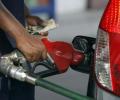
Petrol and diesel prices were hiked for the fourth consecutive day on Saturday by 35 paise per litre, pushing the total increase in rates on petrol to Rs 36 per litre and on diesel to Rs 26.58 since early May 2020 when taxes on the two fuels were raised to record levels. Petrol in Delhi now costs Rs 107.24 a litre and diesel comes for Rs 95.97, according to a price notification of state-owned fuel retailers. The latest increase that follows the unrelenting hike in international oil prices has pushed pump rates across the country to their highest-ever levels.

Despite returns from gold down over 5% in the past three months, it is a good idea to keep this asset class in your portfolio.
However, volatility is likely to be on the rise, said Benjamin Yeo, MD & CIO (Asia & Middle-East) for Wealth & Investment Management, Barclays.
For now, the rupee is likely to remain dependant on global factors. The dollar held on to broad gains on Thursday after Fed chairman Bernanke said the central bank still expected to start scaling back its bond purchase programme later this year, but left open the option of altering that plan.

Led by the weak trend in the broader market, the market capitalisation of BSE-listed companies plunged Rs 1,65,437.91 crore to Rs 1,38,54,439.41 crore.

'Markets are likely to remain choppy for the next 6 months.'

The Indian markets look extremely stretched. The Sensex valuations have gone up 19.28 per cent to 26 per cent since the lows triggered by the sub-prime crisis two months ago. Taiwan and Kospi, on the other hand, have not changed much. A Citi group report suggested that the RBI might hike CRR rates to suck out excess liquidity from the system. An increase of one per cent would draw out $7 billion from the system.
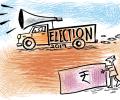
Investors should consider debt mutual funds, banks fixed deposits or high-rated corporate debt instruments.

'Earlier-than-expected tapering from the US, followed by rate hikes, and locally, a potential third wave, which mimics the second wave in terms of severity.'

As global markets near all-time highs driven by liquidity, Marc Faber suggests most asset prices worldwide are inflated.

The US Fed on May 24 hinted at withdrawing its third round of quantitative easing, or bond buying programme, worth $85 billion each month, which began in the wake of the worst credit crisis in September 2008.

The dollar gained strength with the emergence of the US as the only developed economy showing signs of recovery.
'A strong foreign exchange reserve is the best safety net against global spillovers.'

'This market is very expensive in some pockets, dirt cheap in some, and the belly of the market is reasonably valued.'

The broader NSE Nifty, after shuttling between 10,649.25 and 10,782.30 points, finally settled 90.50 points, or 0.84 per cent lower at 10,663.50.

India's numbers have shown a reasonable amount of improvement.

Mark Mobius, co-founder, Mobius Capital Partners, tells Puneet Wadhwa that investors should concentrate more on "value" rather than momentum, and on good small- and medium-sized companies rather than large-caps.

In dollar terms, the Indian markets managed to climb back to 2008 levels only in January this year. The subsequent fall in the rupee because of emerging market woes has once again pushed the markets below their 2008 level in dollar terms.
Amid slowing growth and low interest rates, investors will need to focus on stock-picking, suggests John Remmert.

'Helicopter drop' was first proposed as an alternative to quantitative easing.


With more favourable view on Indian economy and business environment under the Narendra Modi government, the risk premium for Indian papers began to climb down.

From the 30-share Sensex pack, 23 scrips declined in Wednesday's session, led by IndusInd Bank, Bajaj Finance, Tata Motors and Tata Steel which fell by up to 3.87 per cent.

Gold has pushed lower as a result of Chinese selling.

On gold buying occasions such as Akshaya Tritiya, Chiraj Mehta points out, investors are often confronted with the question: Should I make just a token purchase, or should I buy more towards building my allocation in the yellow metal?

Go for high quality and low-to-medium-duration funds in your debt portfolio

Skittish investors snapped up gold and other safe-haven assets amid fears of a global economic slowdown

In all, 37 central banks around the world have eased monetary policy so far this year to boost growth, fight deflation or both
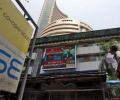
In the Sensex pack, Vedanta took the biggest hit (5.55 per cent), followed by Tata Motors, SBI, Yes Bank, Bharti Airtel and Infosys, which lost up to 4.50 per cent.
Since the burden of 'reserve' tax has fallen primarily on SMEs as they depend on bank finance, a further hike in its Cash Reserve Ratio will definitely hit the SMEs and small savers.

'If the Union Budget can provide incentives for animal spirits to come as well as induce demand stimulus and consumption, the Budget would have done a wonderful job.'

Demonetisation, Donald Trump's surprise victory in the US presidential elections, and the fear that US Fed may hike rates in the upcoming policy review in December have dented market sentiments, report Puneet Wadhwa & Deepak Korgaonkar.

While Governor Das was sanguine on government walking the fiscal prudence path--which was missed three out of the five budgets of the Modi government--Acharya pointed to the fiscal slippages as a worry.

Christopher Wood, global head of equity strategy at Jefferies reiterate his bullish view on Indian equities on the back of a steady fall in Covid cases coupled with a sharp economic recovery in India, reports Puneet Wadhwa.

By piling more pressure on governments, central banks risk not accomplishing much and yet provoking a political backlash that could threaten their independence.
Global private equity major KKR has ranked India second among the emerging markets on external risks, citing the high fiscal and current account deficits.
 © 2026 Rediff.com - Advertise with us - Disclaimer - Privacy Policy - Sitemap - Feedback - About us - Terms of use - Grievances